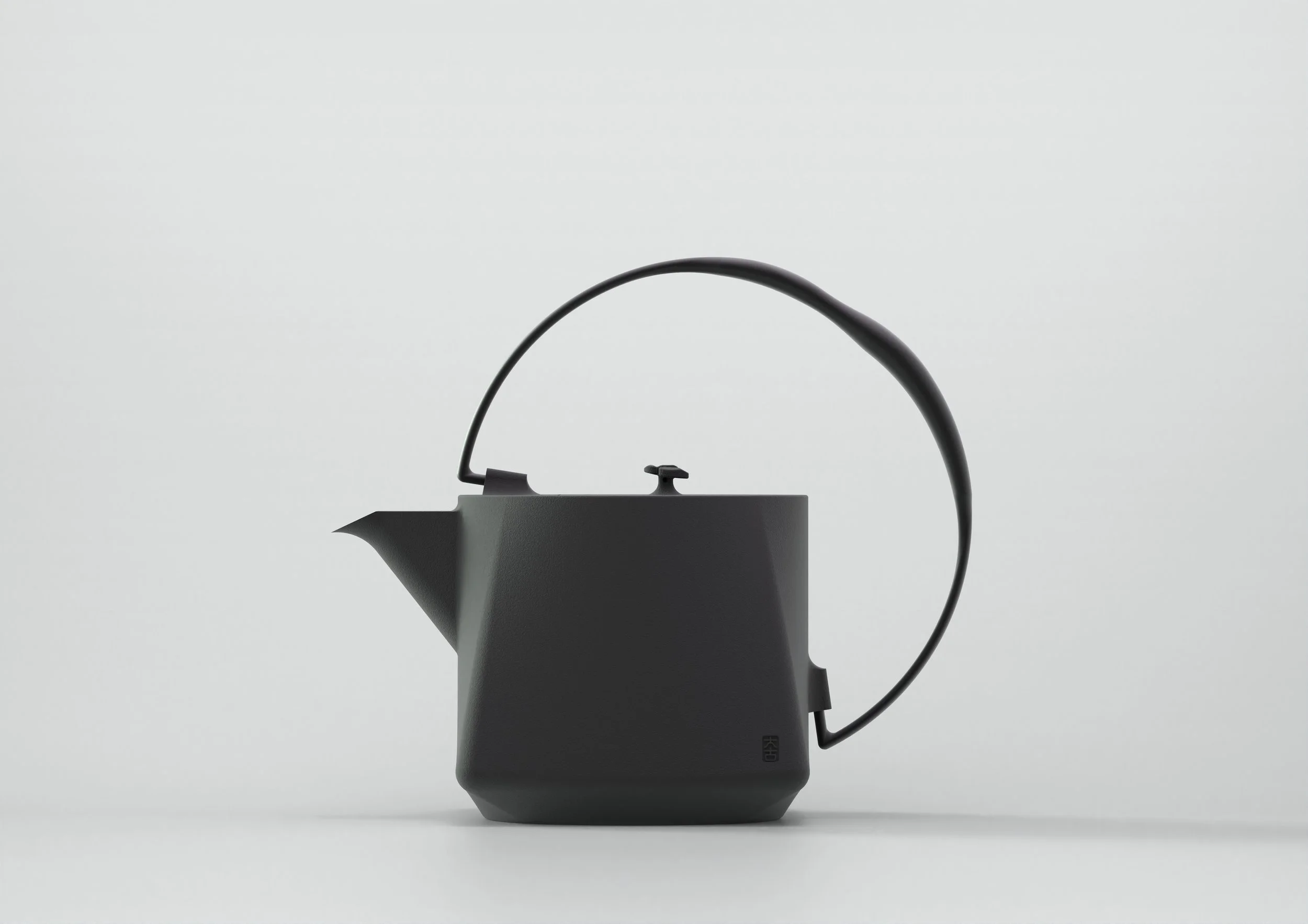

The philosophy between a round and a square
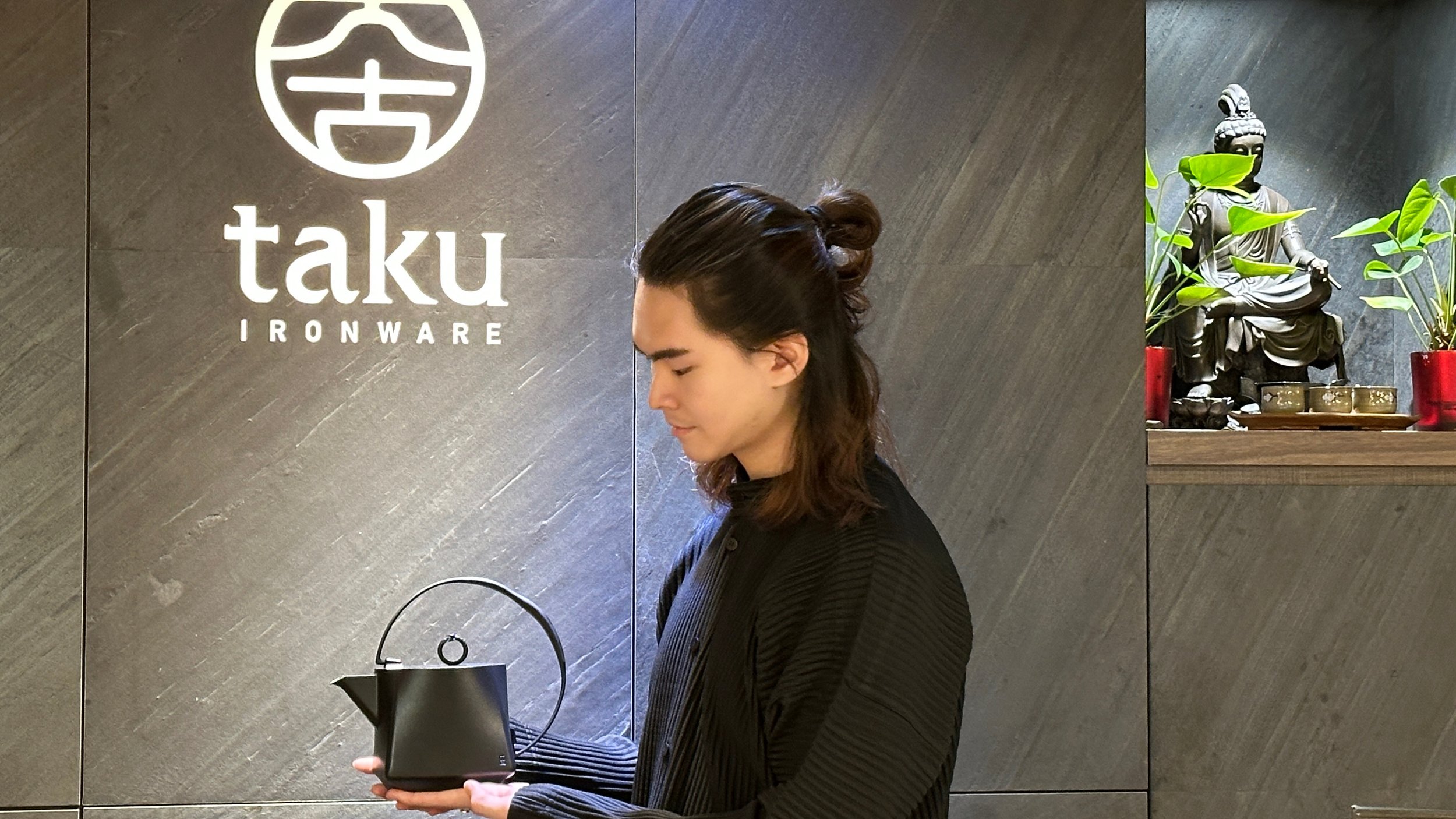
This project was developed in two phases in collaboration with TAKU Ironware. In the second phase, the design was adapted for commercial release as a Year of the Snake edition. Rooted in the Chinese philosophy of harmony and balance, it brings beauty to an everyday object through a contemporary geometric language.

x

Equilibrium - Cast iron Kettle / 鑄鐵壺
PROJECT
2023-2024
YEAR
Lead Product Designer (End-to-End Solo Execution)
ROLE
TAKU IRONWARE. LTD.
CLIENT
TAKU IRONWARE. LTD.
MANUFACTURING
Taku ironware Design Award Gold Awardr
AWARDS
PRESS / MEDIA
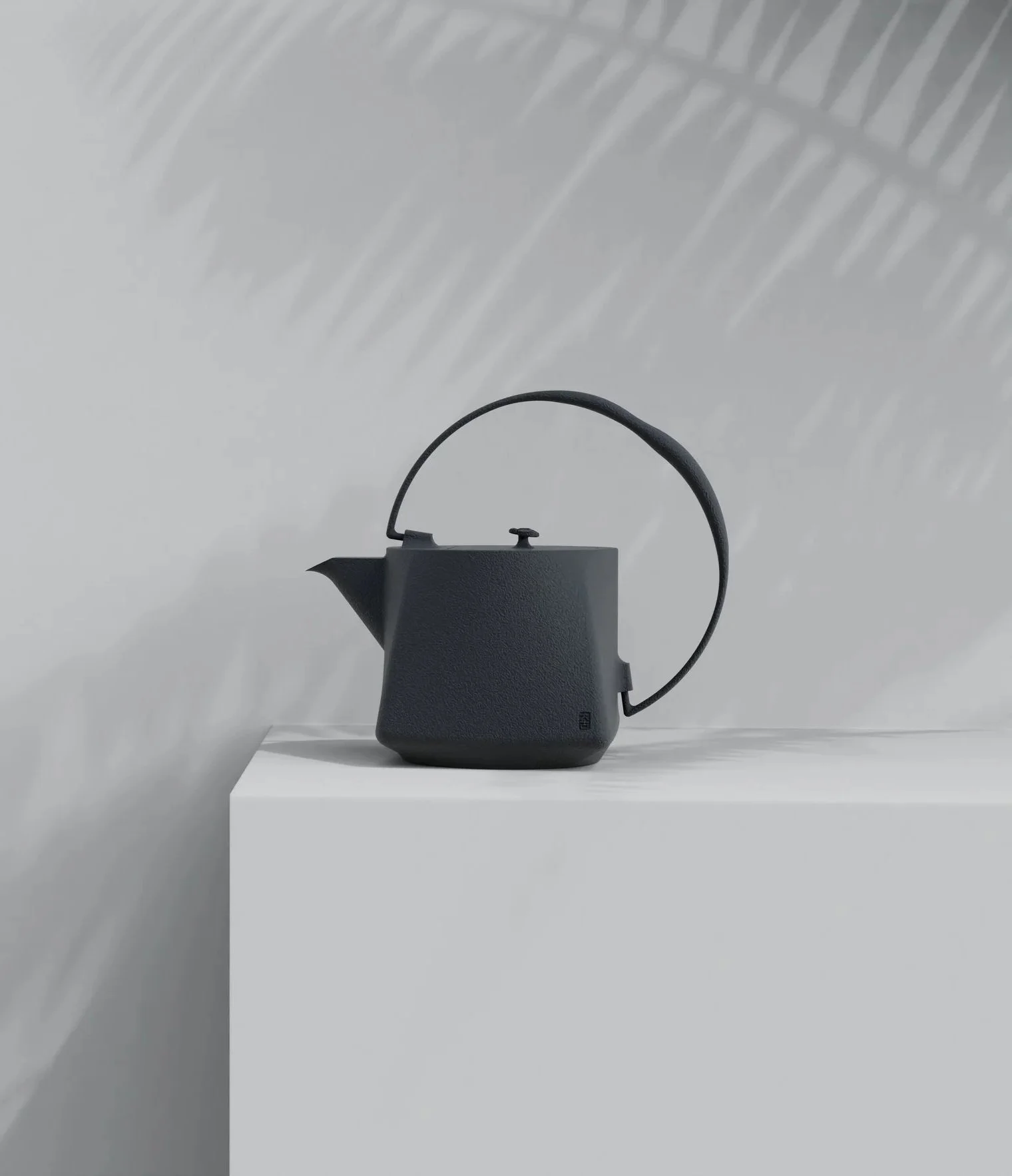
The Object
Casting the geometry of heaven and earth into an everyday ritual.
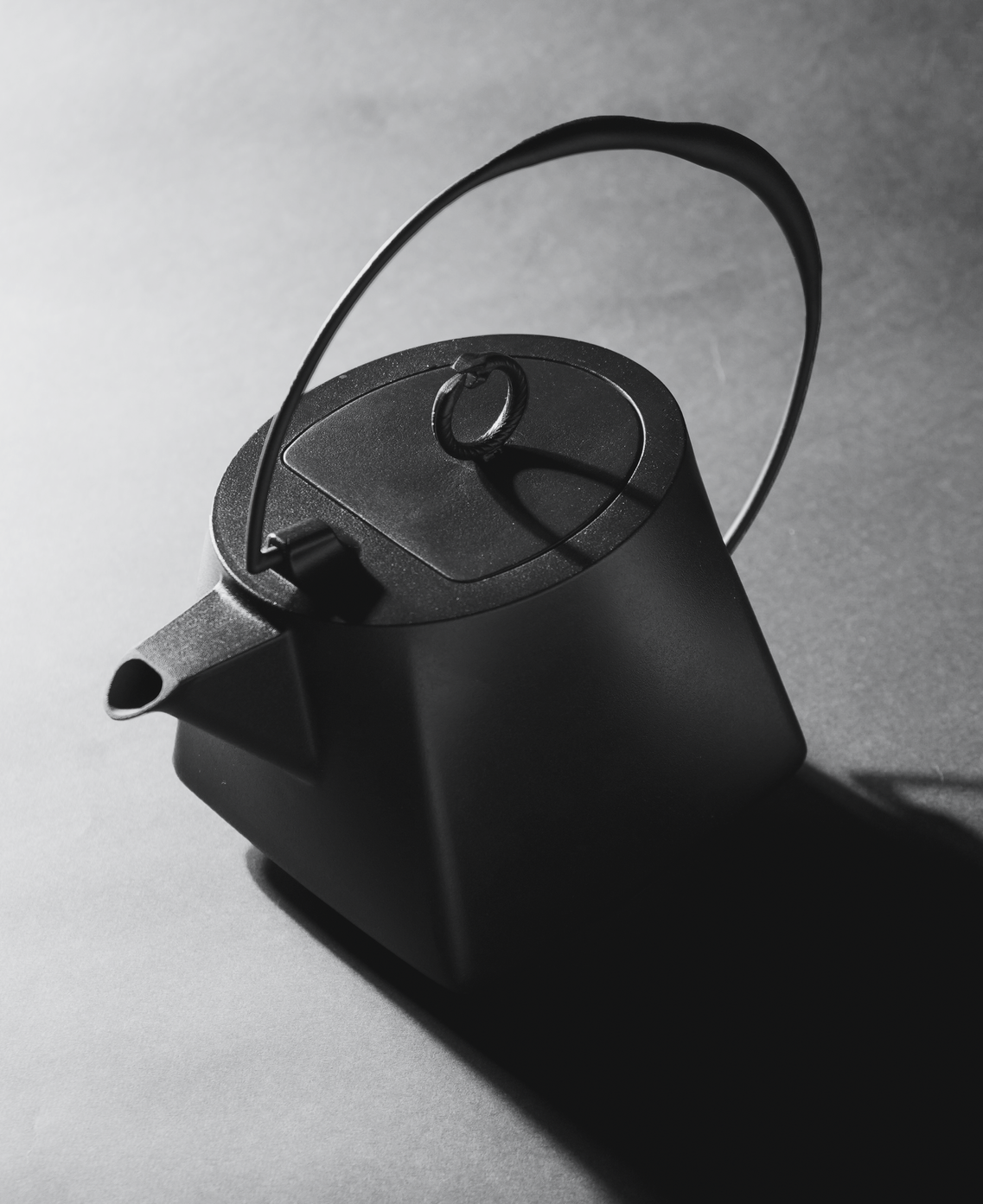
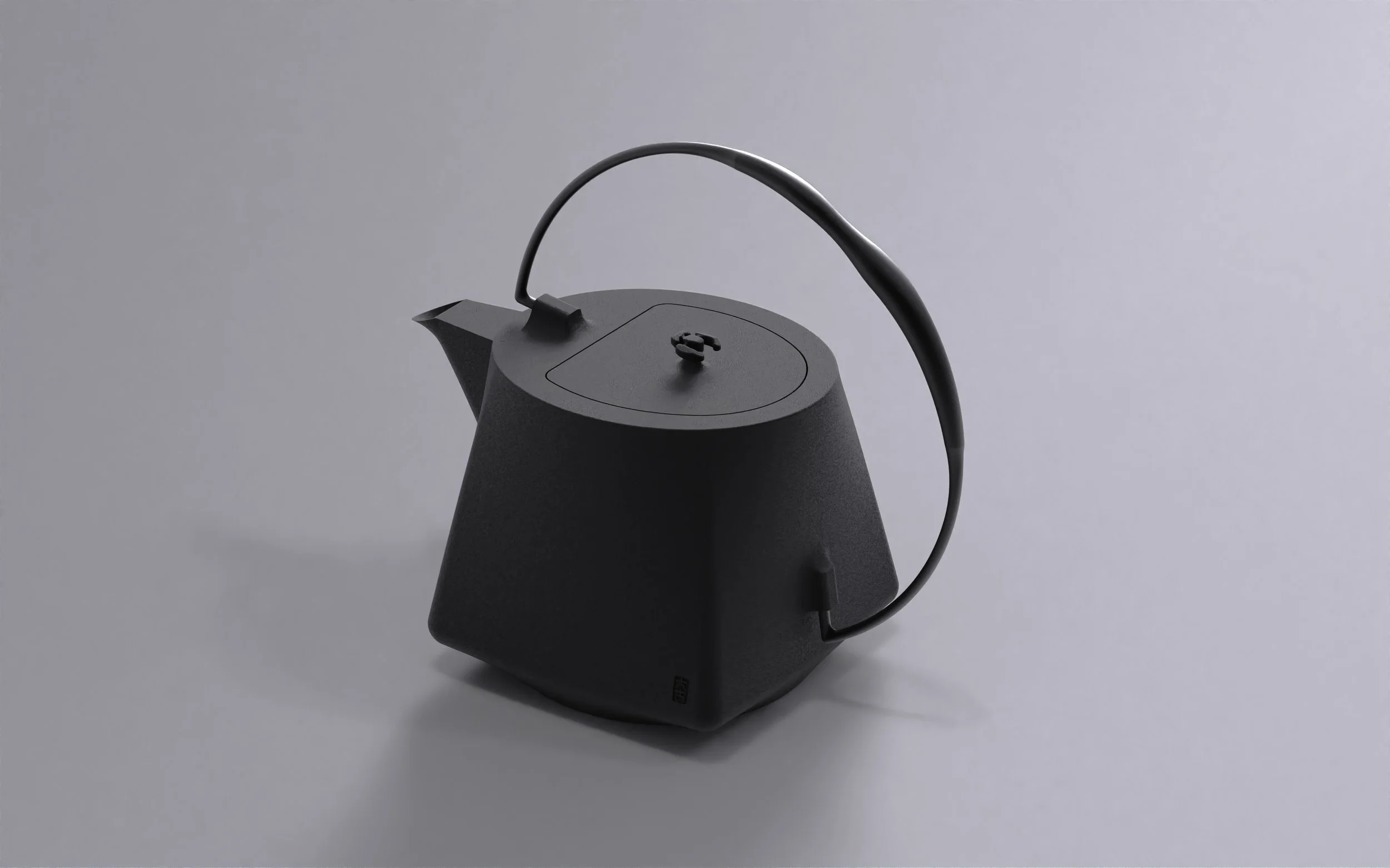
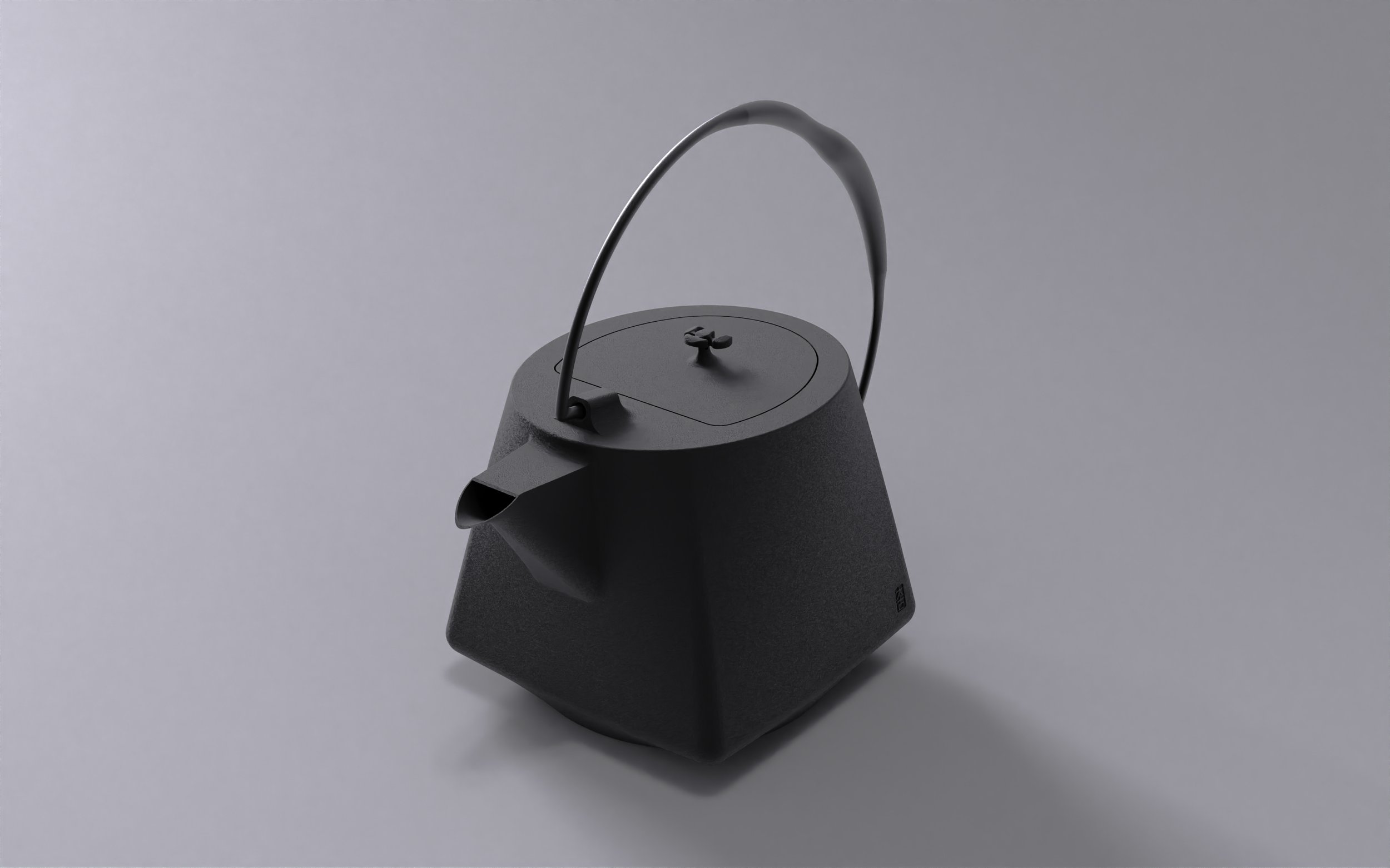
Inspired by the ancient vision of a round heaven and a square earth, Equilibrium gives this meeting of forms a tangible presence. A sweeping arc rises above a grounded body, bringing balance to the moment before water is poured.
Philosophical foundation
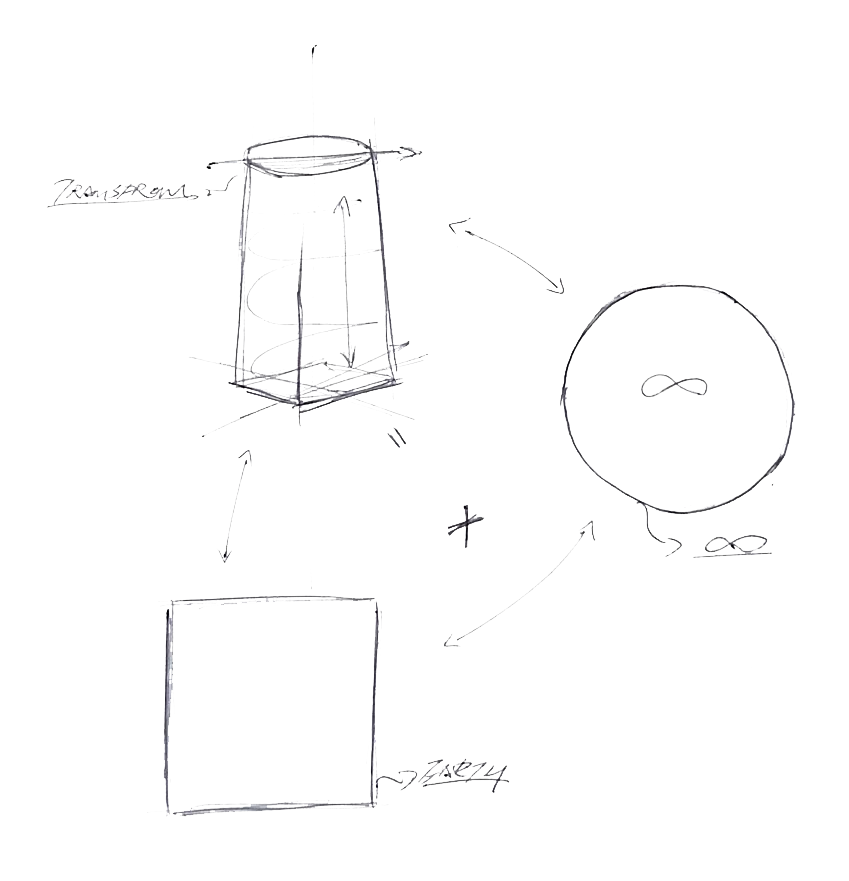
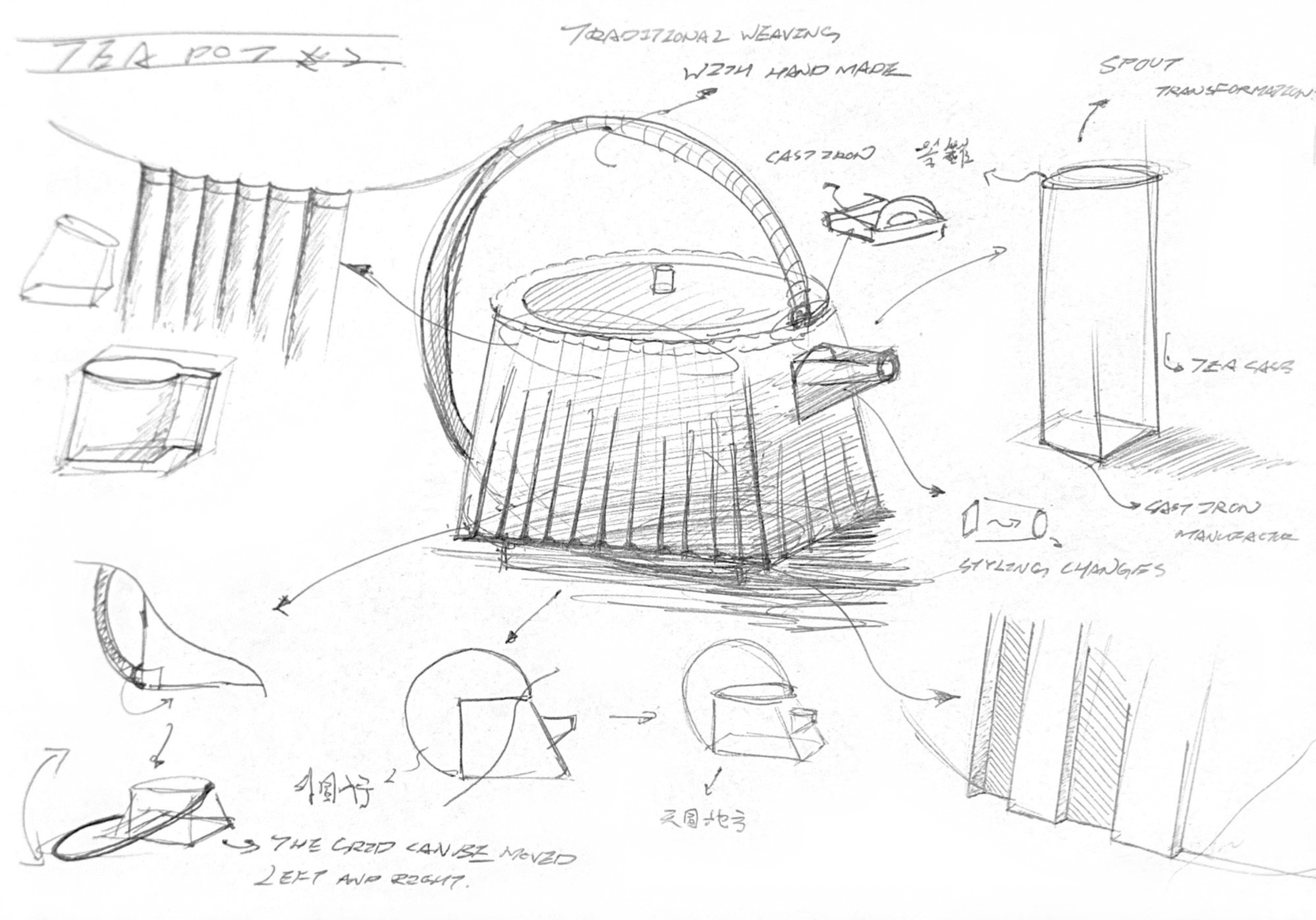
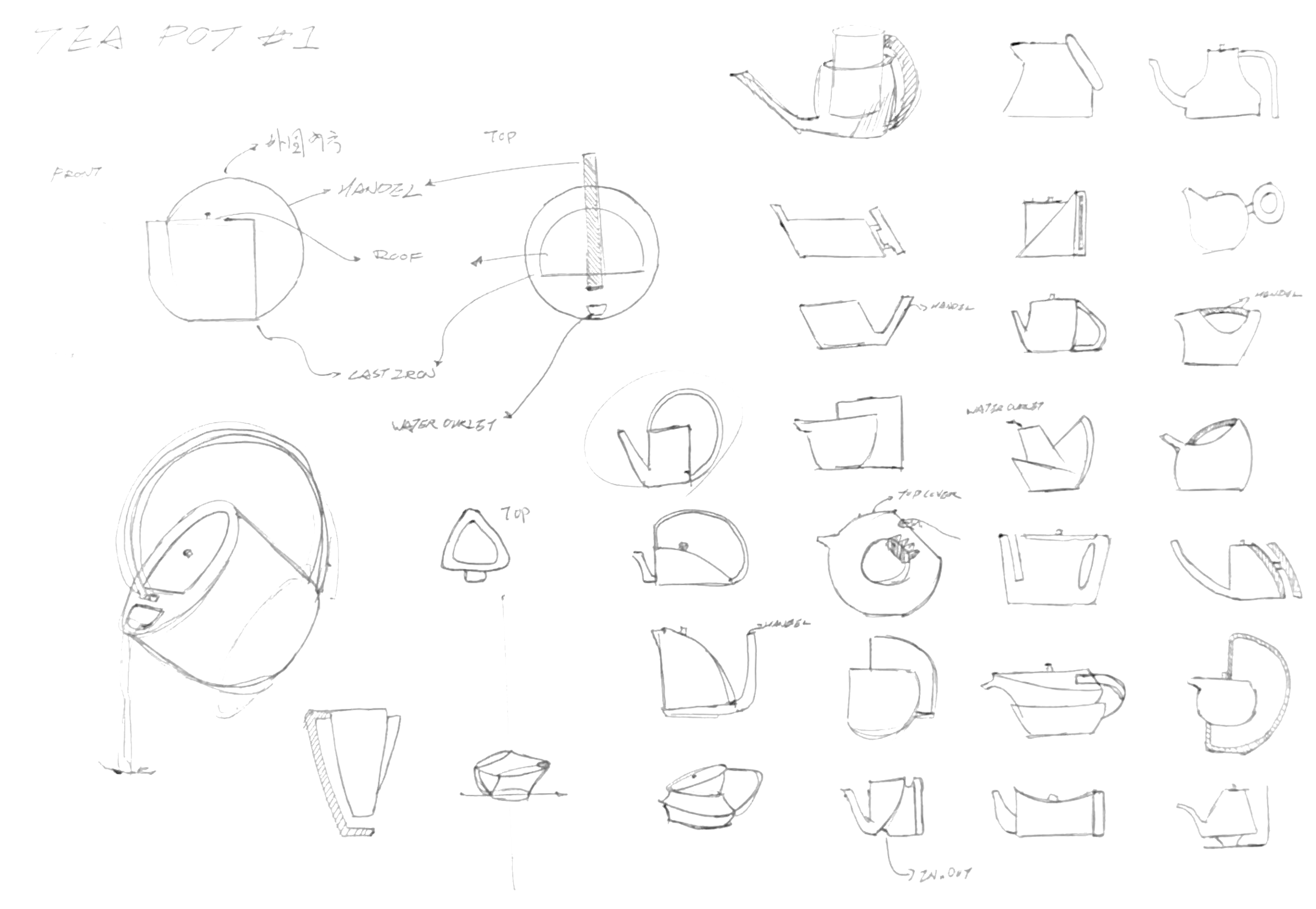
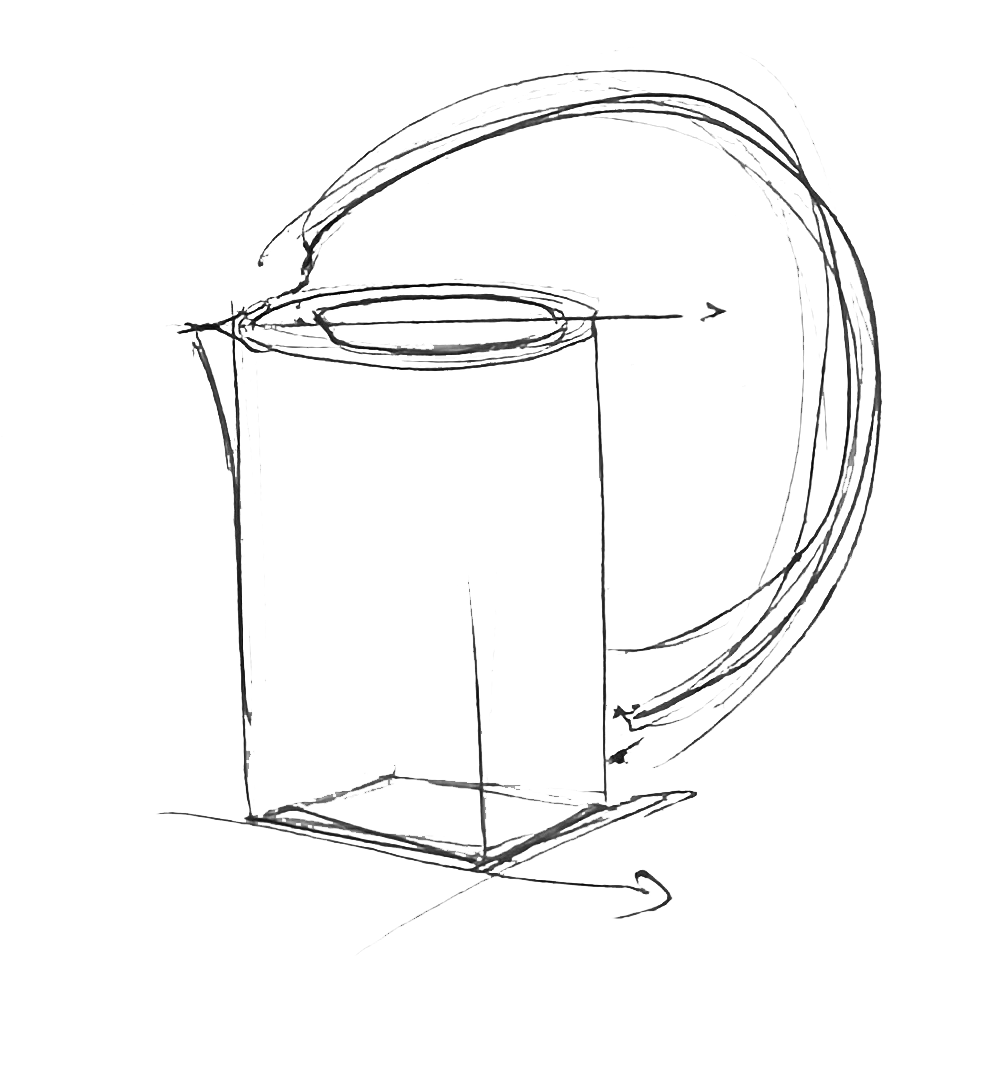
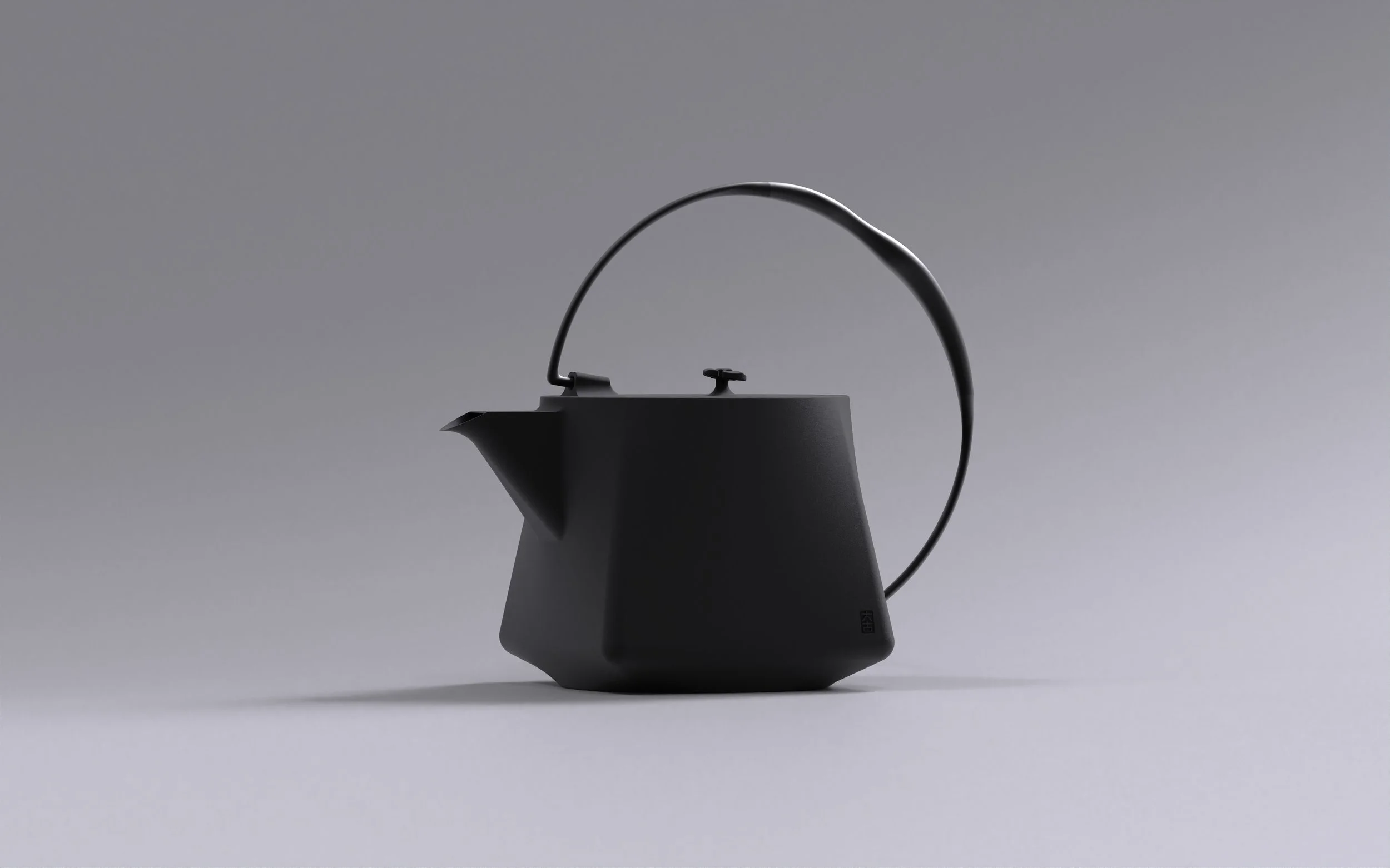
Equilibrium begins with tianyuan difang—the historical idea of a round heaven and a square earth—and translates the relationship between circle and square into a cast-iron kettle. Its sweeping handle creates an open, fluid outline, while the softened geometry of the body gives the object a grounded presence. As the viewing angle changes, the two forms cease to be opposing symbols and become parts of a single, everyday object.
Research Question
Equilibrium explores the translation of cultural philosophy into three-dimensional form without superficial ornamentation. Through G2/G3 surface continuity, balanced negative space, and calibrated mass distribution, the project reconstructs the contemplative tea ritual into a minimal, dynamic balance between user, vessel, and water.
-
Can ancient metaphysical cosmology be translated into modern geometric artifacts without degenerating into superficial ornament?
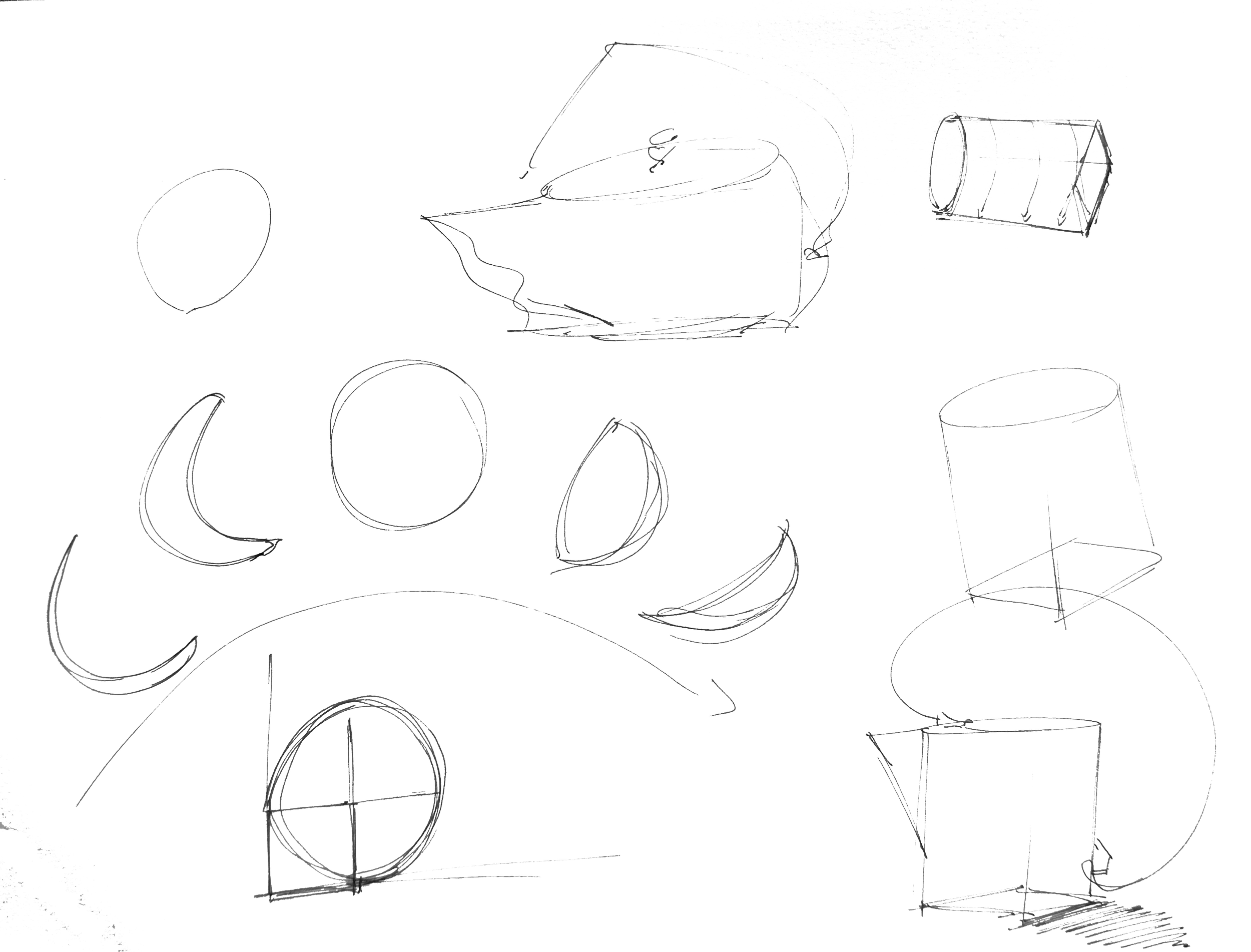
Equilibrium investigates the translation of Eastern dualism (Tian Yuan Di Fang, round heaven and square earth) into contemporary industrial geometry. Rather than applying cultural motifs as two-dimensional surface graphics, the design embodies this philosophy through continuous lofted surfaces (G2 curvature), negative space, and silhouette transitions. As the viewing angle shifts, the square base fluidly resolves into a circular rim—reconciling opposing symbolic geometries into a unified daily ritual.
-
Typological Evolution
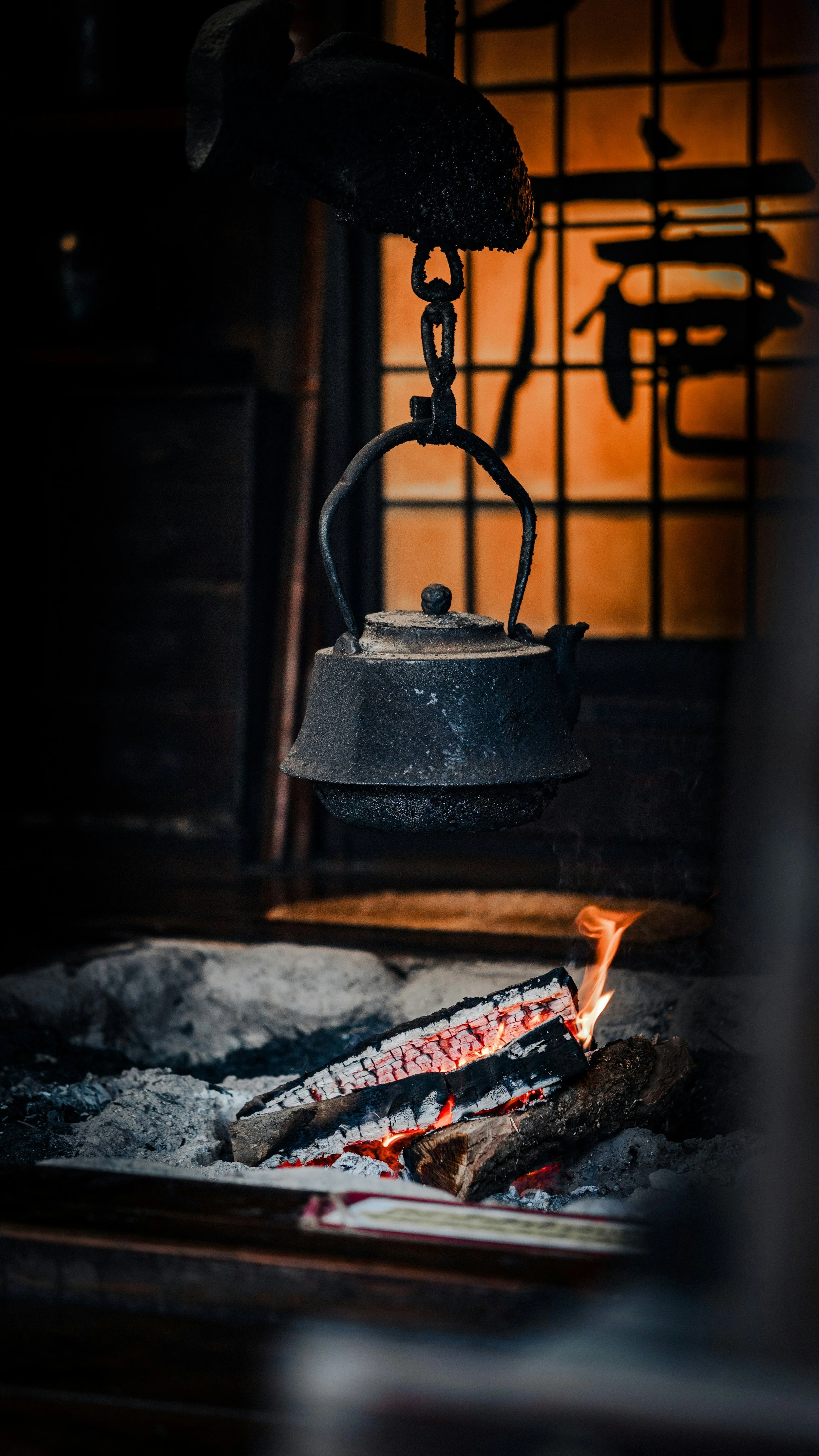
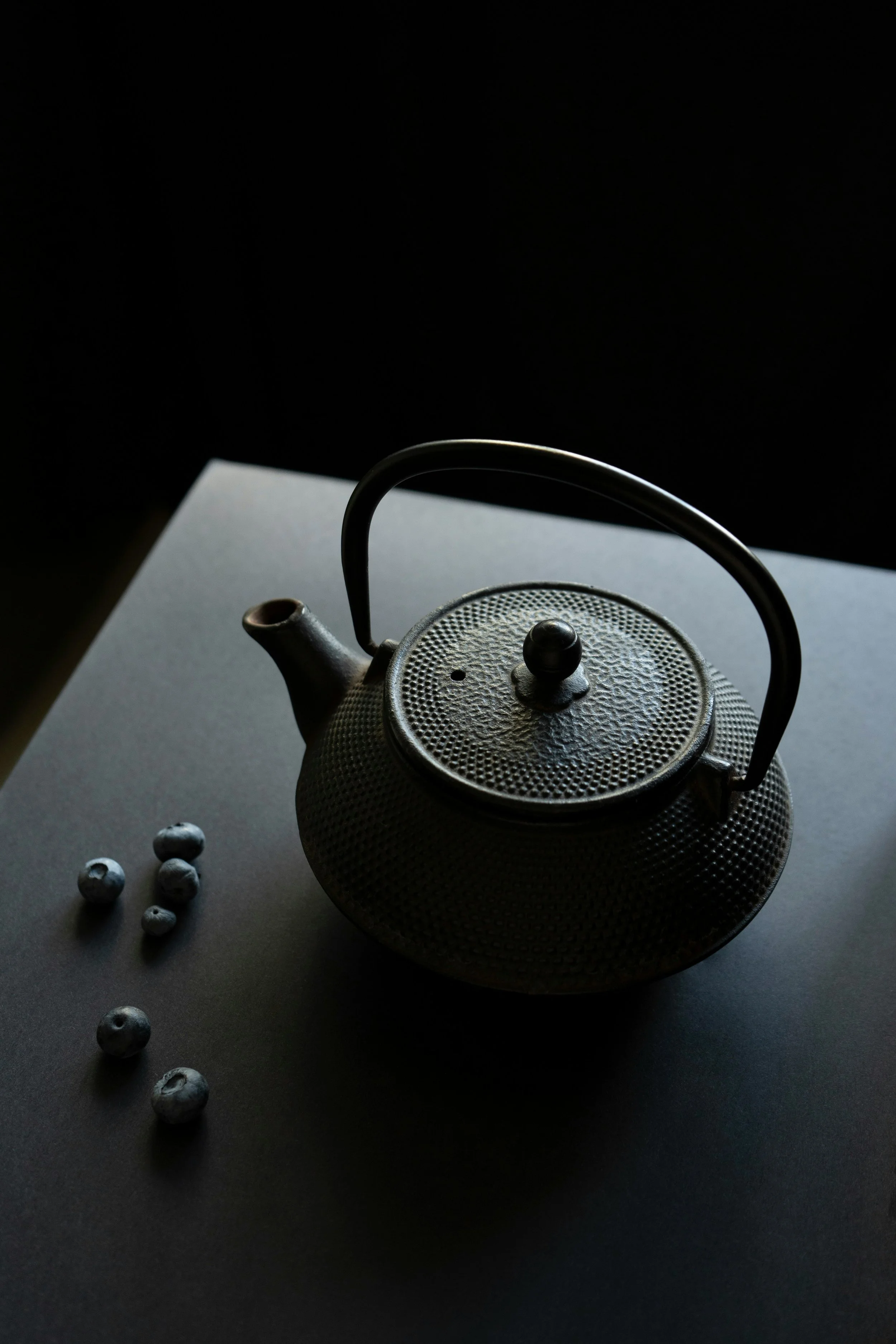
Traditional Japanese Tetsubin forms rely heavily on rotational symmetry (such as the Marugata spherical body) and relief textures (Arare hailstone pattern) to disguise casting grain and simplify sand demolding. Equilibrium breaks away from rotational constraints by introducing a non-axial, square-to-round lofted geometry. The sharp geometric facets catch dynamic architectural light, while the cantilevered ribbon handle introduces lightness and tension against the dense cast-iron body.
-
Translating this sharp, transitional geometry into cast iron demanded a shift from traditional sand casting to industrial-grade lost-wax investment casting.
By eliminating the draft angle constraints inherent to split sand molds, investment casting allows the sharp creases of the square body to converge seamlessly into the circular top rim. Furthermore, the ceramic shell enables precise wall-thickness gradation: thinning to 2.0 mm at the spout and upper body for weight reduction, while retaining 4.0 mm at the base for optimal heat retention. This technical synthesis reduces the kettle’s dry weight to just 1.6 kg—redefining the ergonomic experience of ironware without sacrificing material presence.

Handle Ergonomics
Balancing Geometry and Force
Equilibrium considers not only visual balance but also the relationship between weight, centre of gravity, and wrist loading. With an estimated filled weight of 3 kg, the kettle generates approximately 29.4 N of downward gravitational force.

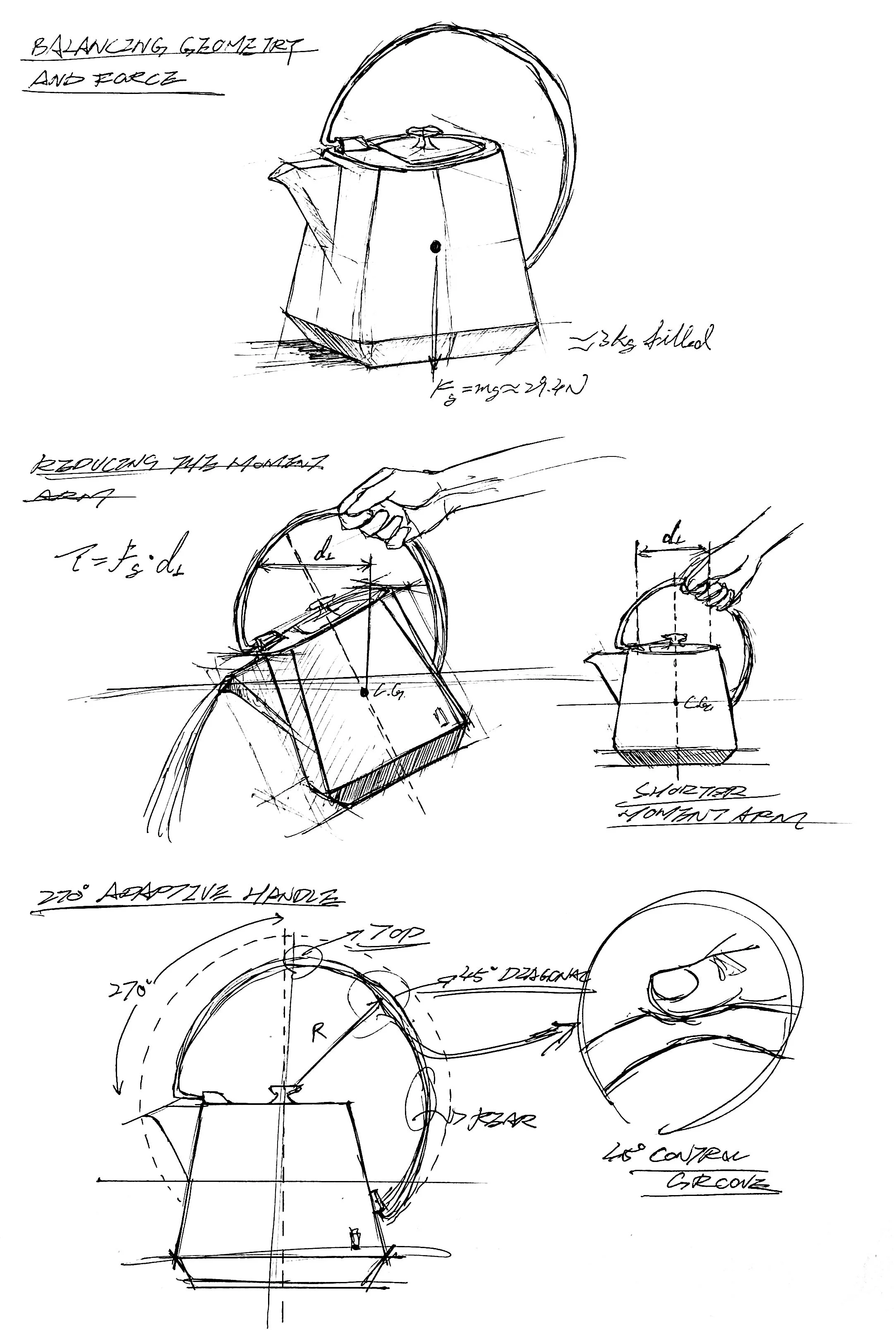
Reducing the Moment Arm
The rotational load resisted by the wrist depends on the kettle’s weight and the perpendicular distance between its centre of gravity and the user’s grip axis:

The smaller the d⊥, the lower the torque that must be resisted by the wrist. NIOSH similarly defines the moment arm as the perpendicular distance between the applied force and the axis of rotation, noting that a longer moment arm requires greater muscular effort to maintain balance.
270° Adaptive Handle
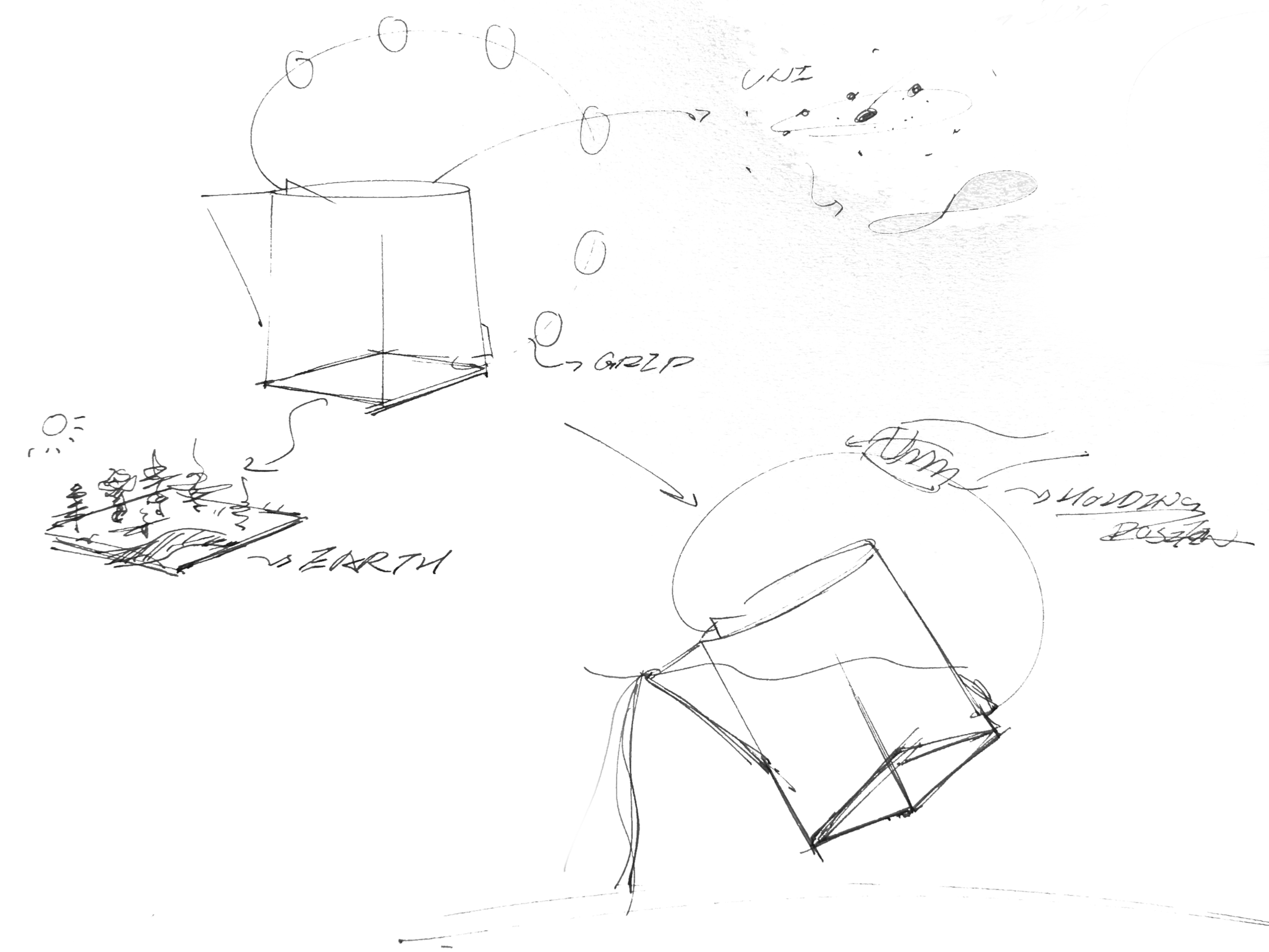
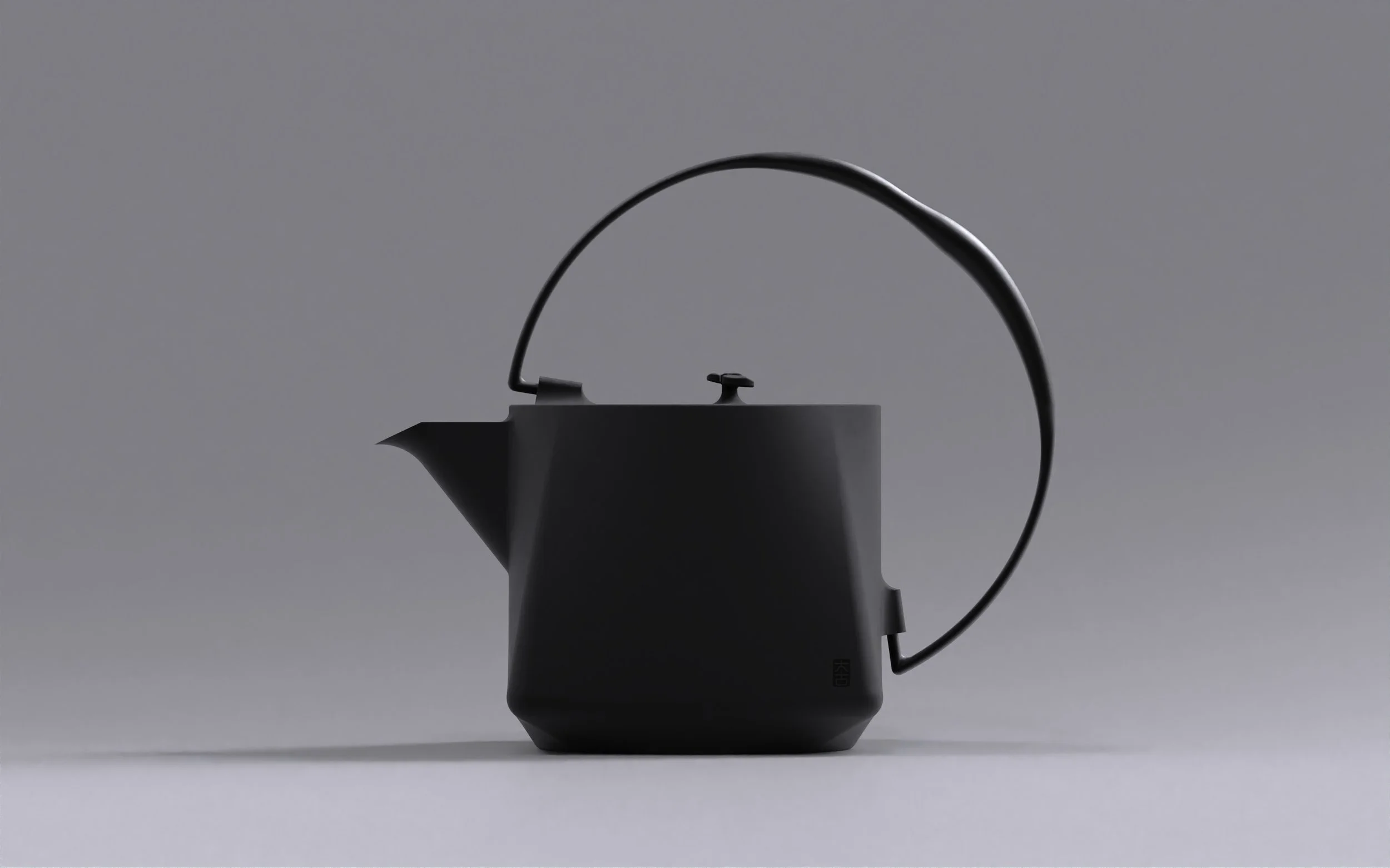
Equilibrium therefore uses a 270-degree continuous handle, creating three primary grip zones: top, diagonal, and rear. Users can reposition their hands according to hand size, preferred posture, and physical capability, allowing the grip angle and moment arm to adapt rather than imposing one fixed position.

The curvature κ is determined by the radius R. Its continuous geometry provides a range of tangent angles, allowing users to select a grip closer to their natural wrist posture. Ergonomic research shows that handle height and orientation create trade-offs between shoulder loading, forearm activity, and wrist deviation, meaning that no single angle is optimal for every user.

One Kettle, More Than One Grip
Rather than prescribing one universal grip, Equilibrium combines a 270-degree continuous handle, a 45-degree control groove, and three adaptive grip zones, enabling users of different hand sizes, habits, and ages to find a more natural operating position. Neutral joint postures generally support better force production and control, while awkward wrist positions can increase muscular activity and accelerate fatigue.
“Turning geometric balance into comfort and control in use”
Form & Detail
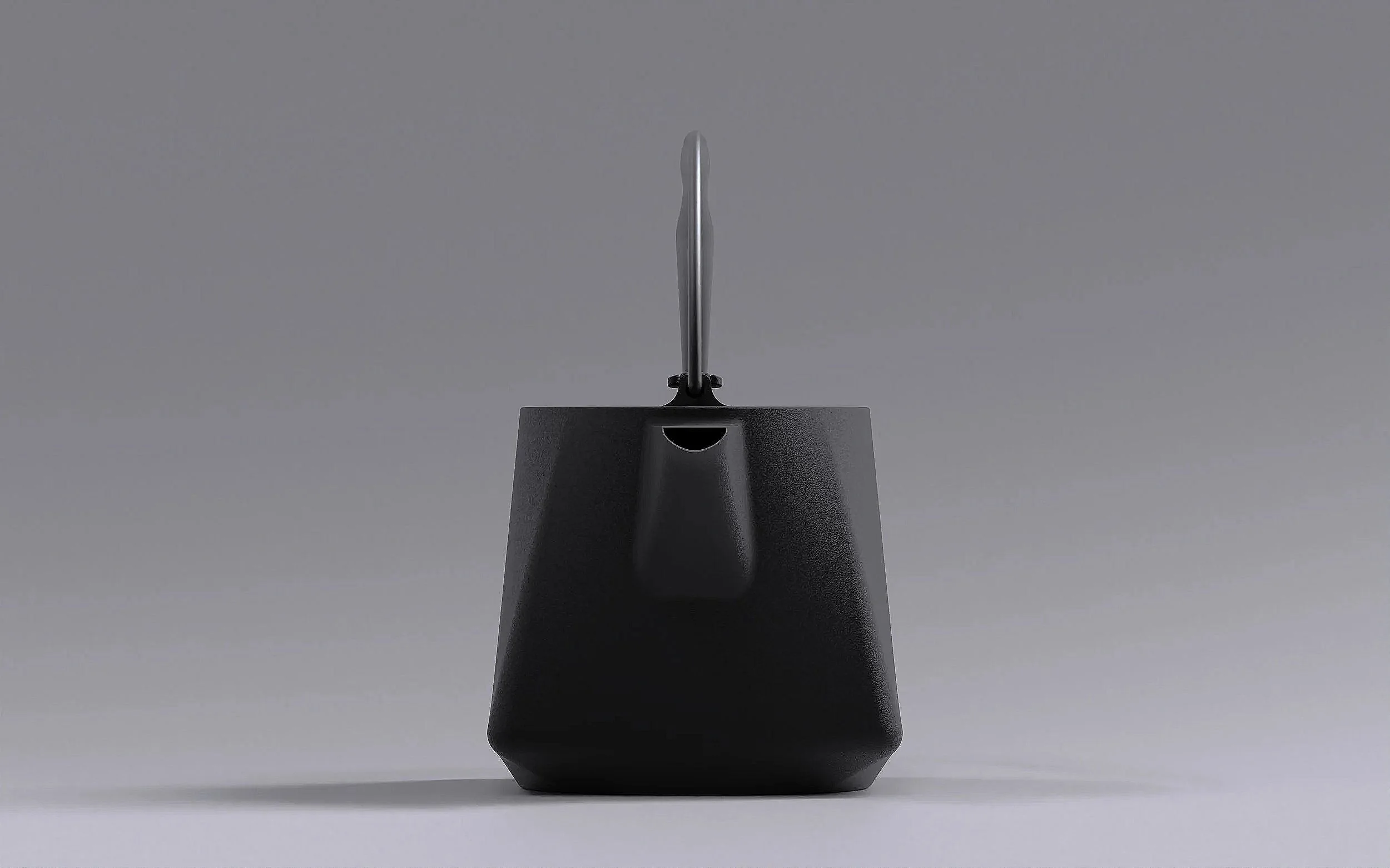
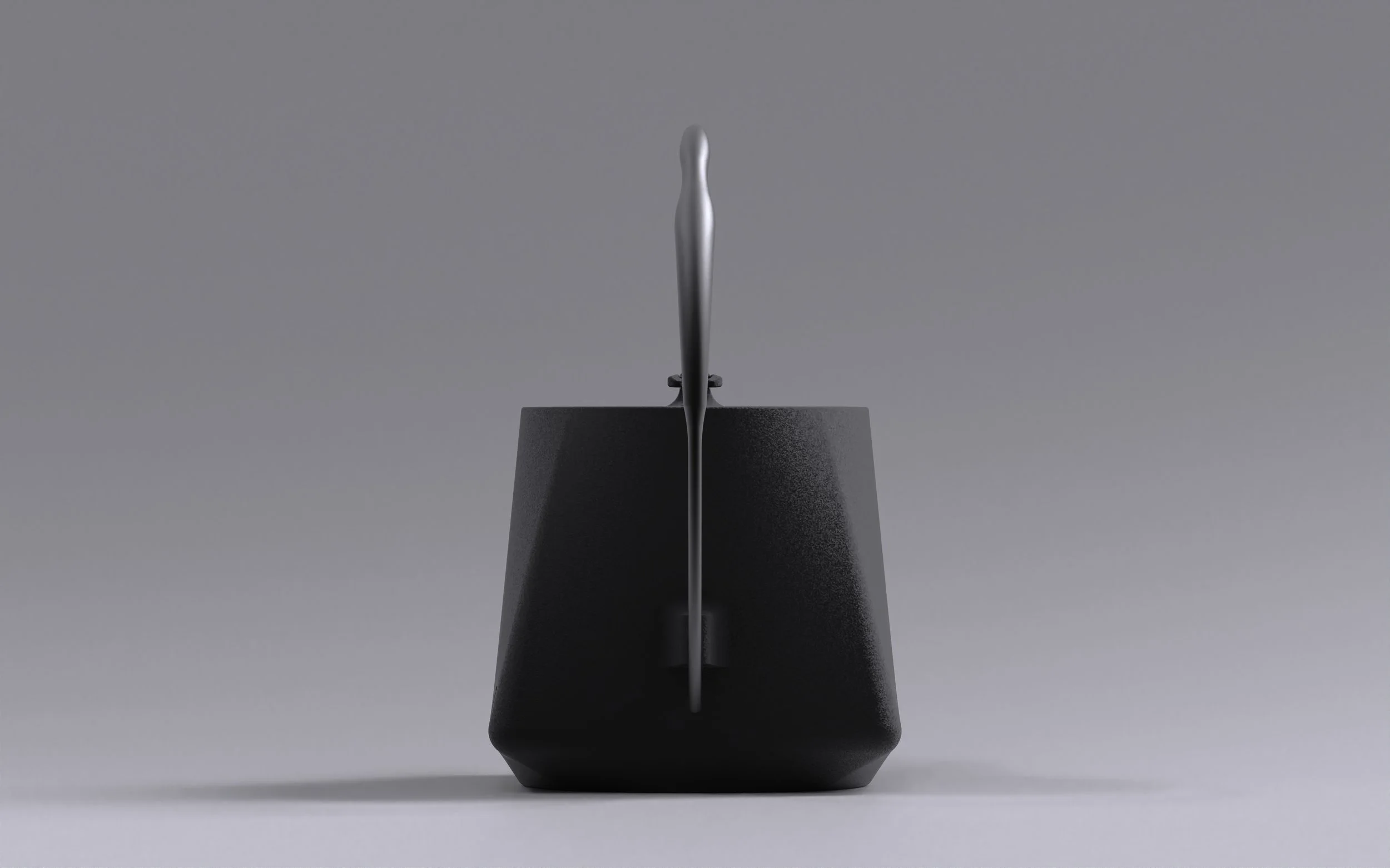
Rather than applying cultural motifs as ornament, Equilibrium translates them into proportion, silhouette, and negative space. The cast-iron body has a grounded visual weight; a near-continuous arc brings lightness and tension to the handle. Softened transitions reconcile the square and the circle, while a subtle surface texture keeps attention on the material itself.
DFM.
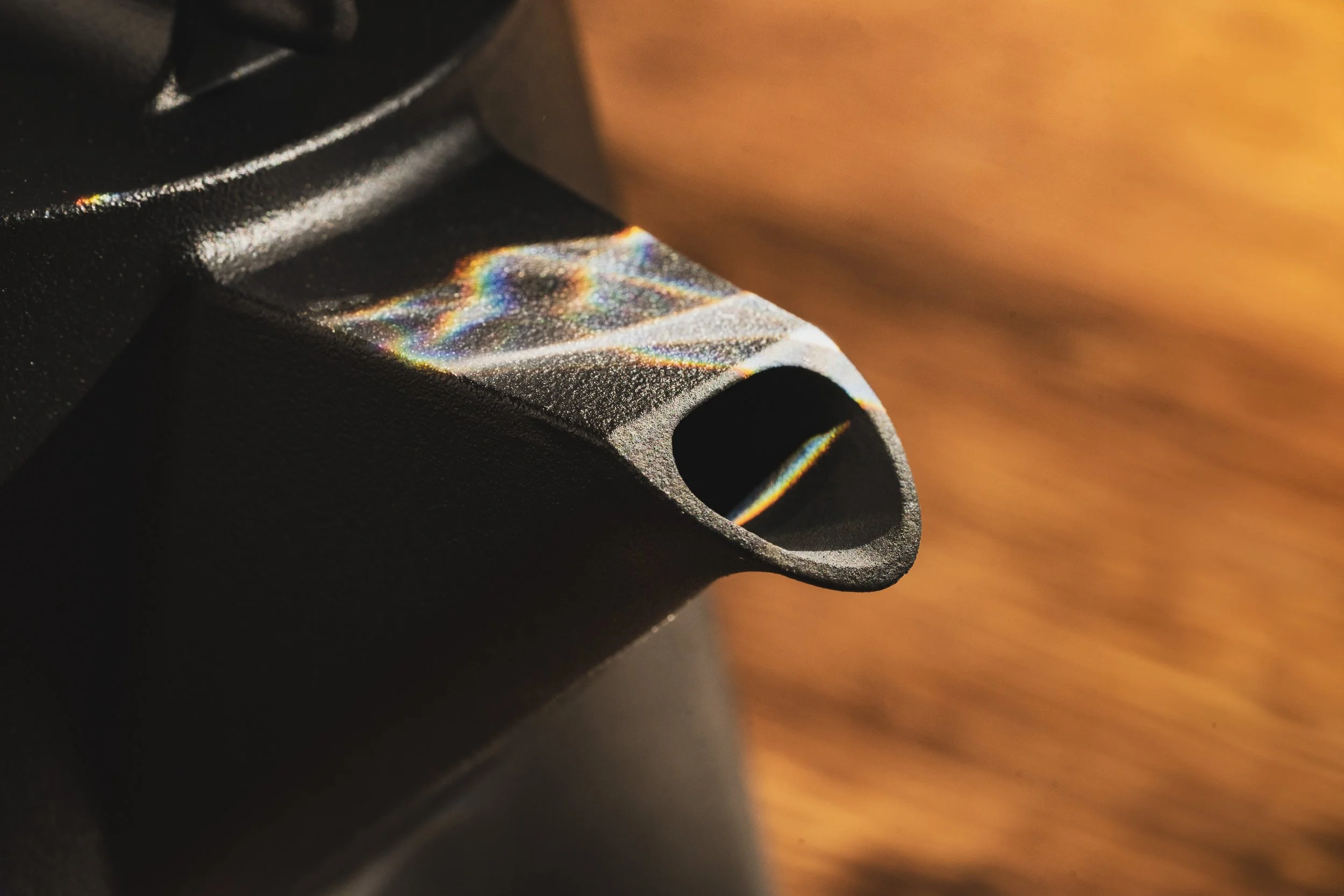
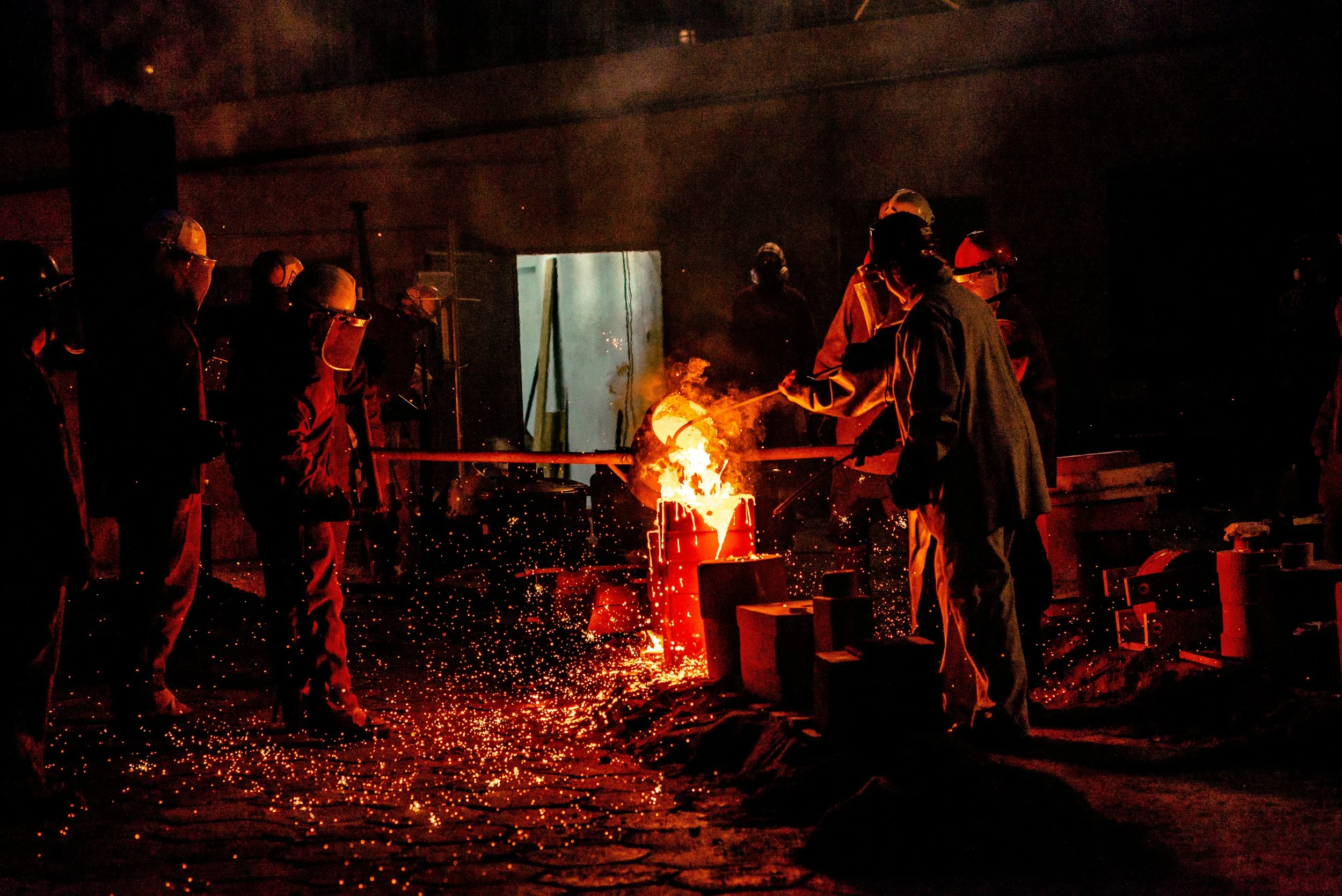
Equilibrium brings its geometric form into dialogue with TAKU Ironware’s precision casting craft. In lost-wax investment casting, a wax pattern is coated repeatedly to create a ceramic shell. Once the wax is removed, molten metal fills the resulting cavity; the casting is then released and finished. Translating this kettle into cast iron requires attention not only to its visible silhouette, but also to wall transitions, corners, the spout, lid fit, and handle connections.
-
With a 1.4 L capacity and an approximate body weight of 1.6 kg, Equilibrium balances the substantial presence of cast iron with everyday handling. Its walls measure approximately 2.5 mm, increasing to around 4 mm at the base and tapering to approximately 2 mm at the spout. These sections respond to different formal and manufacturing requirements; their transitions require careful control and verification in the finished casting. The base measures 18.3 cm in diameter, and the kettle stands 22 cm high, including the handle.
-
The design retains the visual discipline of a square without reproducing sharp corners literally in cast iron. Rounded transitions connect the two geometries while making shell formation and subsequent finishing more manageable. The handle is cast separately in stainless steel and assembled with the iron body, allowing each material to serve a distinct formal and functional role.
-
Production begins with a digital model and the preparation of tooling, followed by a wax pattern of the form. The pattern is repeatedly coated with ceramic slurry, covered with refractory stucco, and dried; the process information for this project records approximately seven shell layers. After the wax is removed, molten iron is poured into the resulting mould cavity. The casting is then released and finished to reveal the kettle’s geometric transitions and surface texture.
-
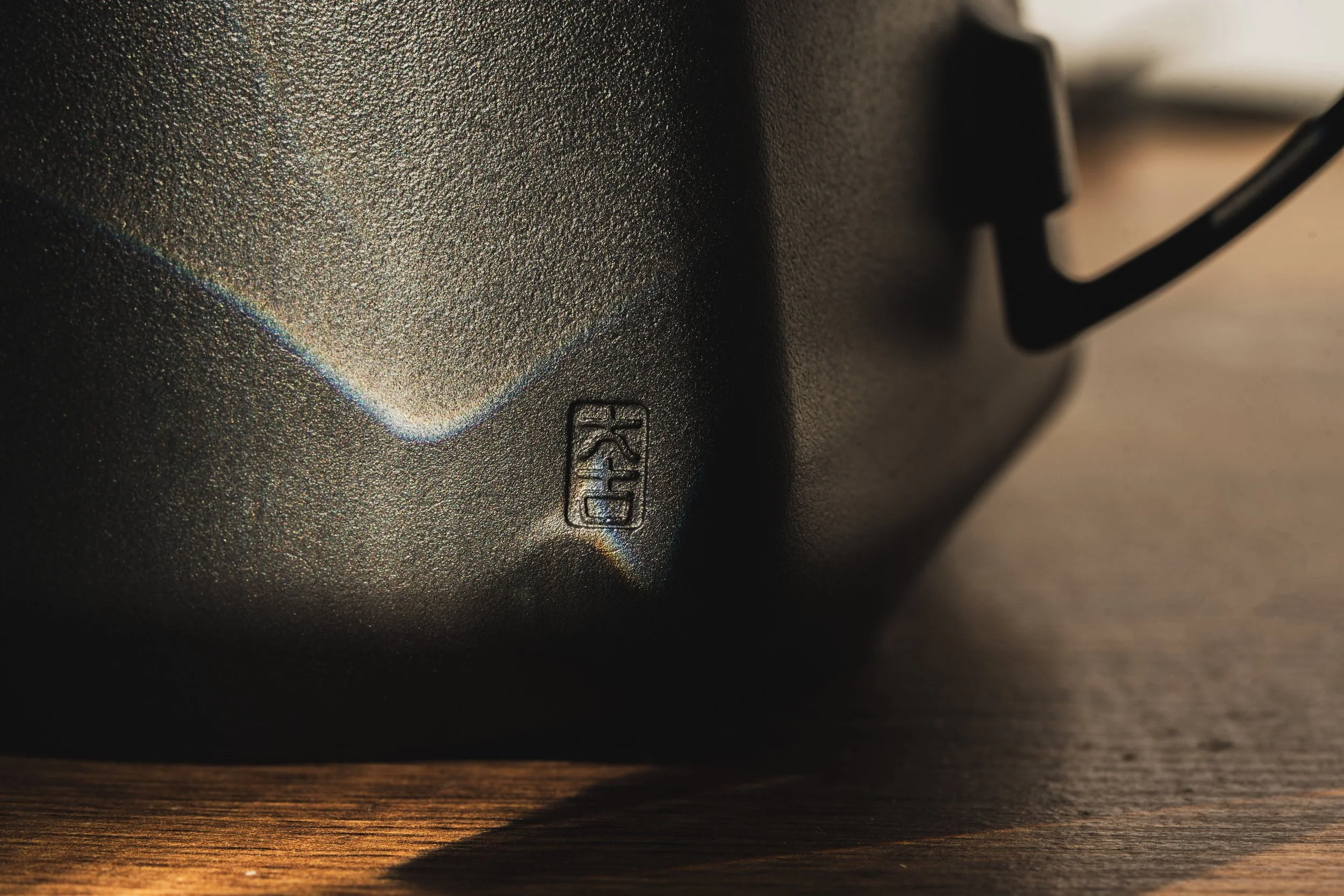
For an object defined by its uninterrupted silhouette and cast-iron surface, gating and finishing must be considered early in development. Less prominent areas can be evaluated for gate placement, while keeping cut-off and finishing marks away from key display surfaces, the lid interface and the pouring path. If the underside is considered, the kettle must still rest securely. Brand markings should be placed on a secondary surface and remain legible after casting and finishing. Final locations depend on the foundry’s filling strategy and inspection of the finished part.
-
The fit between lid and rim must allow easy lifting and placement while remaining stable during pouring. The handle and its attachment points must support the filled kettle through repeated use. Validation should examine lid movement when tilted, the handle’s range of motion, joint strength, grip temperature and the user’s exposure to steam near the opening. These interfaces shape how confidently the object can move from display to daily use.
From Equilibrium to the Year of the Snake Edition
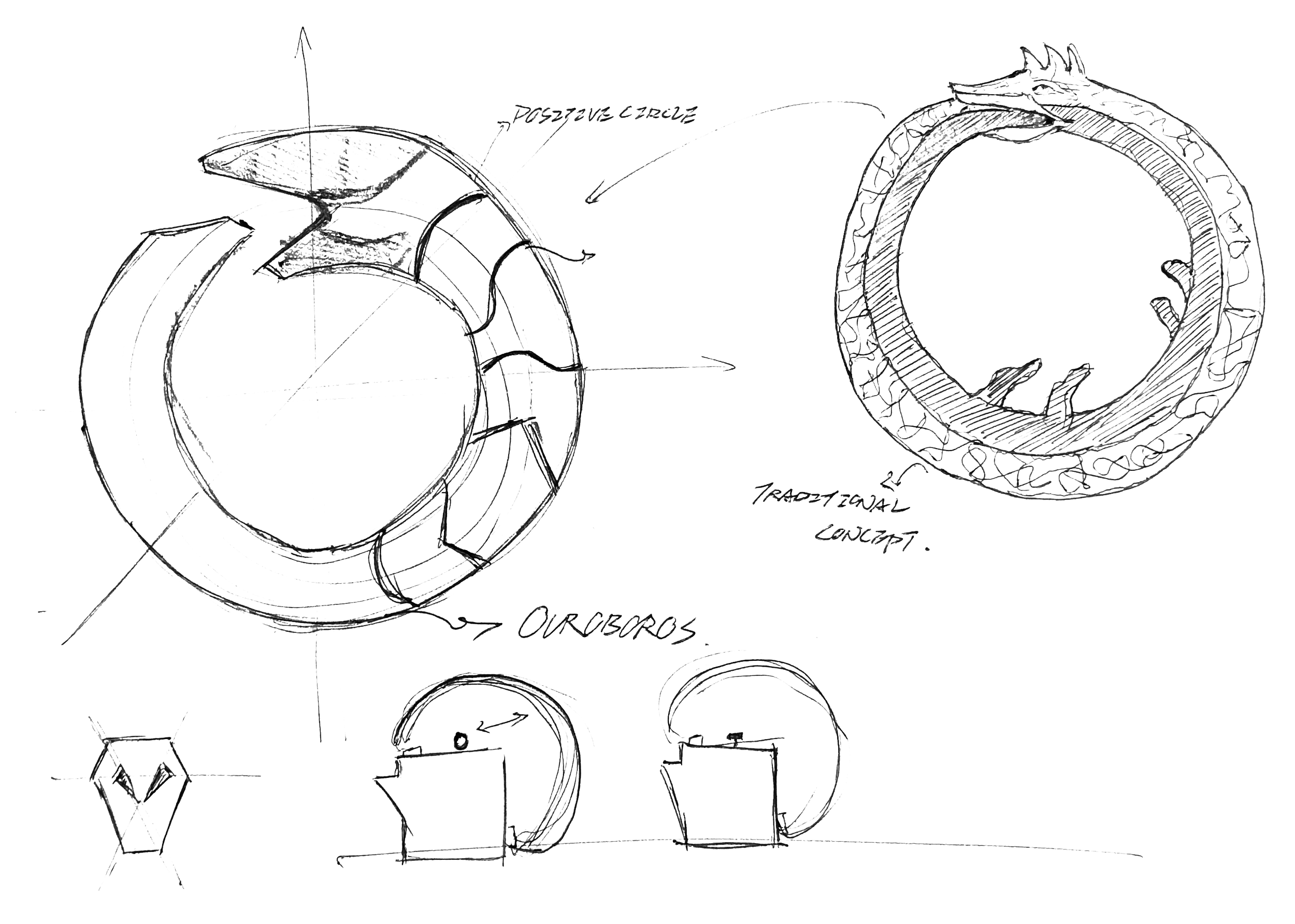

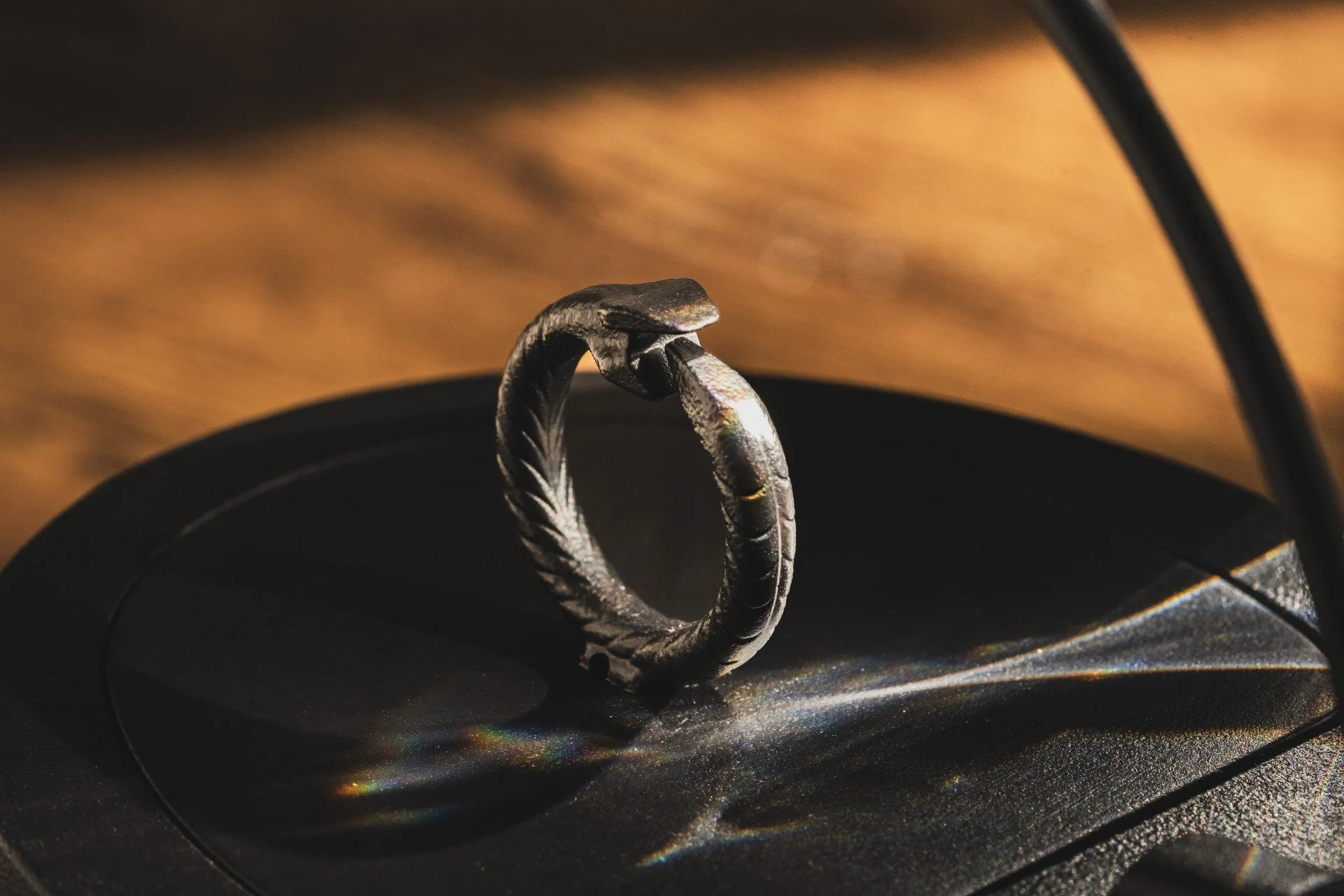
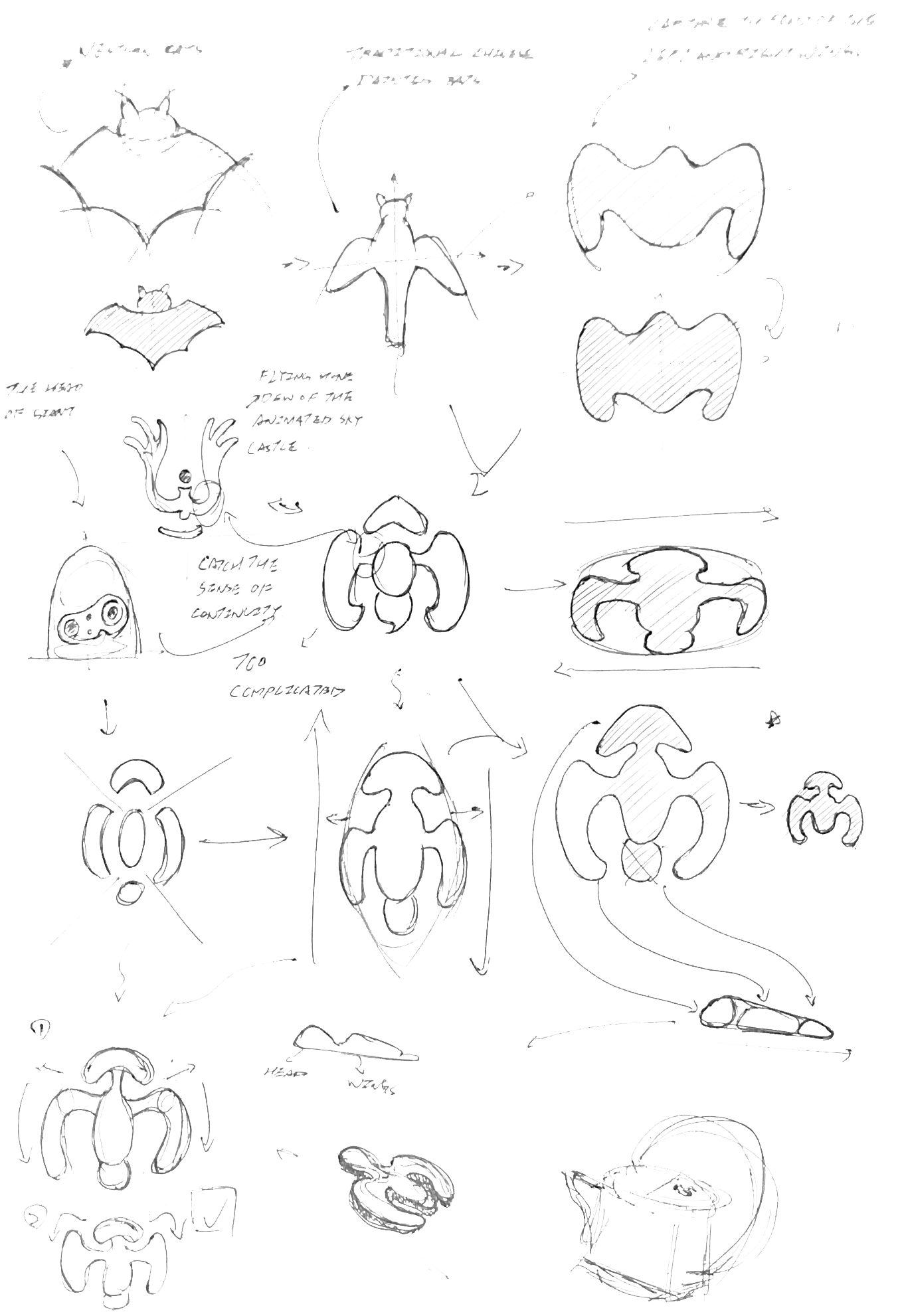
Equilibrium began with a dialogue between the circle and the square, expressed through the kettle’s body and sweeping handle. The original proposal featured a bat-shaped lid knob as an auspicious detail.
As the project developed with TAKU Ironware for its 2025 Year of the Snake collection, the detail was reinterpreted as an ouroboros-inspired snake. The released edition shows how a distinct design language can evolve in response to a brand’s product context.

From Proposal
to Product
Discover the latest additions to our collection—handpicked pieces that bring new energy to your space.
Discover More